
Family & kids
Choosing Kids' Glasses: A Complete Guide for Parents
Choosing the right glasses for a child is crucial. Beyond vision correction, consider comfort, durability, and style. This guide helps you find the best optical glasses for your child in Uganda.
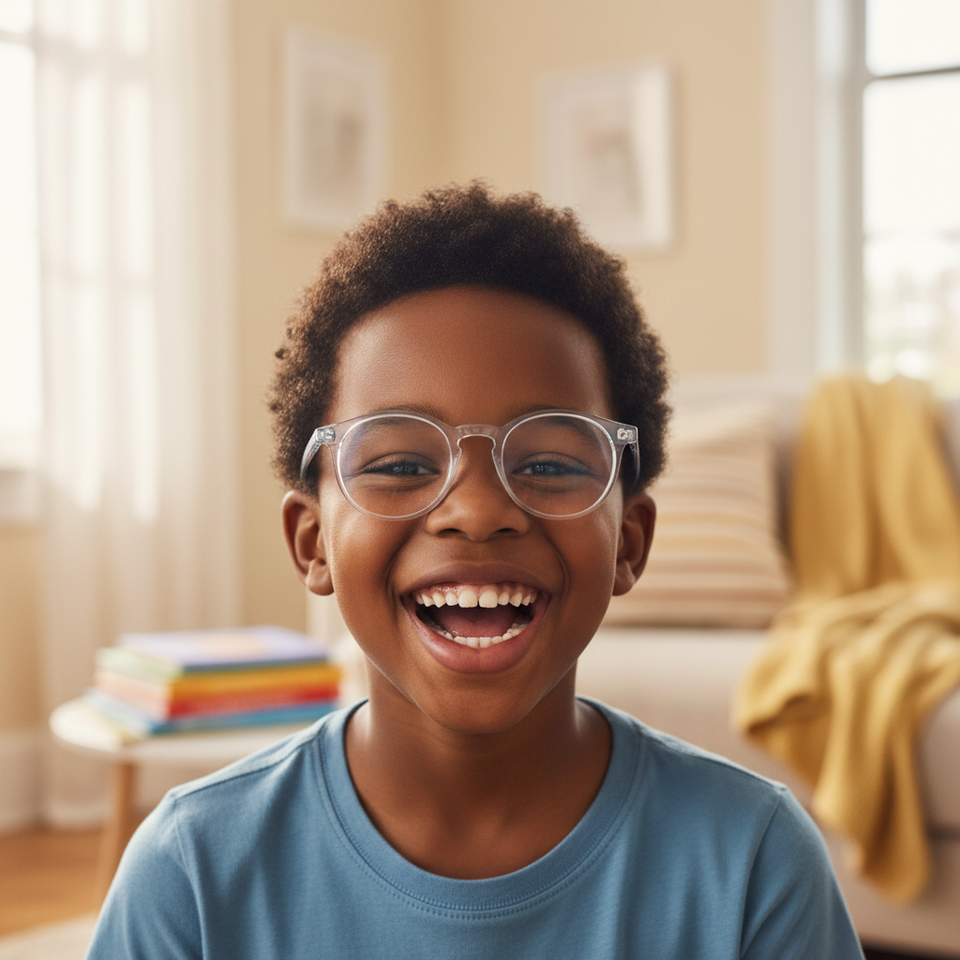
Choosing the right pair of glasses for a child can quickly become a headache for parents. Beyond visual correction, you need to think about comfort, durability, style, and most importantly, whether the child will accept them. The wrong pair can end up at the bottom of a drawer, negating all the benefits for their eyesight. This practical guide is here to walk you through it step by step. You will discover practical tips to find the best glasses for your child, taking into account the realities and options available in Africa.
Why is Choosing Glasses for a Child So Crucial?
Good vision is essential for a child's development. Blurry vision can lead to learning difficulties, especially when reading from the board or books. It can also affect their safety during playtime or sports. But the challenge is also psychological. Poorly fitted, heavy, or 'ugly' glasses can lead to teasing and affect a child's self-confidence. The goal is to find a pair that will help them thrive, not one that becomes a burden. Choosing the right optical glasses for a child is an investment in their overall well-being.
Criterion Number 1: A Suitable and Sturdy Frame
The frame is the structure that holds the lenses. For a child, it must be chosen with special care. Forget about smaller versions of adult frames; children have their own unique facial structure.
Size and Shape: The Basics of a Good Fit
A good fit is the key to comfort and the effectiveness of the glasses. Here are the points to check with the optician:
- Eye Centering: Your child's pupils should be in the horizontal and vertical center of each lens. This is essential for the optical correction to be effective.
- The Bridge of the Nose: Children often have less developed nose bridges, causing glasses to slide down. The frame should rest properly on the nose without leaving red marks or pinching. Silicone nose pads can help provide a better grip.
- Frame Width: The glasses should not be wider than the face at the temples. If they are too wide, they will be unstable.
- Temple Length: The 'arms' of the glasses should follow the curve behind the ear without pressing too tightly. If they are too short, the glasses will be pushed forward. If they are too long, they won't stay in place.
- Height: The frame should not touch the cheeks, even when the child smiles. The top edge should stop below the eyebrows so as not to limit their field of vision.
Materials: Prioritise Flexibility and Safety
Children run, jump, and fall... Their glasses need to keep up! Durability and safety are therefore non-negotiable when choosing glasses for a child.
- Plastic (Acetate or Grilamid TR-90): This is the most common choice for young children. These materials are lightweight, hypoallergenic, highly impact-resistant, and available in many bright colours. Some models have flexible hinges that allow the temples to bend in any direction without breaking.
- Flexible Metal (Titanium): For slightly older children, frames made of titanium or shape-memory alloys are an excellent option. They are incredibly lightweight, durable, and can return to their original shape after being bent.
Avoid standard metal frames, which can bend easily or break, creating potentially dangerous sharp edges.
Lenses that Protect and Correct Effectively
If the frame is the body, the lenses are the heart of the glasses. Their quality is essential for your child's visual health.
The go-to material for children is polycarbonate. Unlike mineral glass, which is heavy and breakable, or even standard plastic (organic), polycarbonate is up to 10 times more impact-resistant. This is an essential safety feature to protect their eyes in case of a fall or getting hit by a ball. Additionally, it is lighter and offers natural protection against the sun's harmful UV rays.
Beyond the material, several coatings can be added to improve the comfort and durability of the lenses:
- Anti-scratch coating: This is a must-have. A child's glasses are often handled roughly. This surface coating hardens the lens and protects it from scratches that could impair vision.
- Anti-reflective coating: It reduces glare from artificial lights (like classroom fluorescents or car headlights) and improves visual clarity. It also makes your child's eyes more visible behind the lenses, which is more aesthetically pleasing.
- Blue light filter: With the increasing use of screens (tablets, phones, TVs), this coating is becoming more and more popular. It filters a portion of the blue light emitted by screens, which can help reduce visual fatigue.
Involving Your Child in Choosing Their Glasses
One of the biggest challenges is making sure the child will actually wear their glasses. The best way to achieve this is to involve them in the decision-making process. A child who has helped choose their glasses will take ownership of them more easily and be prouder to wear them.
Here are some tips to make this step go smoothly:
- Pre-select: With the optician's help, select 3 to 5 frames that are technically suitable for their face shape and prescription.
- Let them have the final say: From this approved selection, let your child choose the colour or shape they prefer. It's their personal touch.
- Praise their choice: Compliment them on their good taste. Tell them their new glasses look great on them. Turn this purchase into a positive and exciting experience rather than a medical requirement.
The Importance of Follow-up and Advice from Your Lapaire Optician
The journey doesn't end once the glasses are purchased. A child's vision changes quickly, and their face grows. Regular follow-up is therefore essential.
The first step, even before choosing a frame, is to have an up-to-date prescription. If you have any doubts about your child's vision or if their last check-up was more than a year ago, an exam is necessary. That's why at Lapaire, we offer a free eye test in all our branches across Africa (in Ivory Coast, Burkina Faso, Mali, Uganda, and many other countries). It's simple, fast, and carried out by professionals.
Our opticians are trained to give you the best advice for your child's glasses. They will help you check every aspect of the frame's fit and recommend the most suitable lenses and coatings for your child's needs and lifestyle. They can also perform free adjustments if the glasses loosen over time.
In summary, to choose the best glasses for a child, you need to focus on a sturdy and perfectly fitted frame, polycarbonate lenses with the right coatings, and don't forget to involve your child in choosing the style. It's a team effort between you, your child, and your optician.
Don't wait any longer to take care of your child's vision. Book an appointment today for a free eye test at your nearest Lapaire branch.
This article is for informational purposes. For a personalized diagnosis, consult a Lapaire optician.